

Integrated Pest Management Plans for Businesses

When it comes to pest control, waiting until there is a visible infestation can be a costly mistake. For many businesses, a reactive approach means dealing with disruption, damaged stock, hygiene concerns, unhappy customers and potential compliance issues. That is why more organisations are turning to Integrated Pest Management Plans, also known as IPM plans, as a practical and effective long-term solution.
At Stratton Pest Control, we help businesses reduce pest risks through proactive pest management that focuses on prevention as well as control. Rather than simply treating a problem once it appears, an IPM plan is designed to identify risks early, remove the conditions pests need to thrive and provide ongoing monitoring to keep your premises protected.
What is an Integrated Pest Management Plan?
Integrated Pest Management is a planned, preventative approach to pest control. It combines regular inspections, monitoring, site-specific recommendations, proofing advice, hygiene improvements and targeted treatments where required.
The aim is not just to remove pests, but to make your premises less attractive and accessible to them in the first place. This gives businesses greater control over risk and helps prevent minor issues from becoming larger infestations.
For commercial premises, IPM is especially valuable because it supports health and safety, protects brand reputation and helps businesses demonstrate due diligence.
Common pests in different business sectors
Different industries face different pest pressures, which is why a tailored IPM plan is so important.
Facilities
Facilities management teams often oversee complex buildings with multiple access points, bin storage areas, kitchens, washrooms and plant rooms. These environments can attract rats, mice, pigeons, flies and cockroaches if not carefully managed.
Food and Beverage
In food and beverage settings, pest control is critical. Businesses may encounter rodents, flies, cockroaches and stored product insects such as beetles and moths. These pests can contaminate ingredients, damage packaging and create serious food safety concerns.
Healthcare
Healthcare environments must maintain high standards of cleanliness and infection control. Common pest risks include rodents, flies, ants and, in some cases, bed bugs. Even low levels of pest activity can affect patient confidence and create operational concerns.
Hotels
Hotels need to protect both guest comfort and reputation. Bed bugs are a major concern, but hotels may also face issues with rodents, flies and pests in kitchens, laundry rooms and waste areas.
Pharmaceuticals
Pharmaceutical facilities require strict environmental control and consistent compliance. Common pest threats include flying insects, rodents and stored product pests, all of which can affect product integrity, packaging and audit outcomes.
Restaurants
Restaurants are naturally attractive to pests because of food preparation, warmth and waste. Rats, mice, flies, cockroaches and drain-related pests are among the most common problems. A proactive pest plan helps reduce risks before they affect service or hygiene standards.
Retail
Retail premises can experience rodent activity in stockrooms, birds around roofs and signage, and flies near entrances or waste storage areas. Shops selling food may also be at risk from stored product insects.
Warehousing
Warehouses often provide ideal shelter for rats, mice, birds and stored product insects. Large storage areas, regular deliveries and hidden harbourage points can make early detection difficult without regular monitoring.
Agriculture and Horticulture
Agricultural and horticultural environments may attract rodents, flies, birds and a range of insect pests drawn to crops, feed, standing water and waste. These pests can cause contamination, crop loss and financial damage if left unchecked.
Stables & Equestrian
Rodents and insects pose a serious risk in equestrian environments. They can contaminate feed and bedding, damage tack rooms, and compromise horse health. Integrated Pest Management (IPM) provides a proactive, long-term approach that prevents infestations before they disrupt daily yard operations.
Why proactive pest control is better than reactive pest control
A reactive approach usually begins once there is already a noticeable pest problem. At that stage, the business may already be dealing with complaints, damaged stock, contamination risks or reputational harm.
A proactive IPM plan offers clear advantages.
Regular inspections and monitoring allow pest activity to be identified at an early stage, often before it becomes visible to staff or customers. Risk factors such as gaps around doors, poor housekeeping, damaged drains, overflowing bins or structural defects can also be picked up and addressed quickly.
This preventative approach can reduce the likelihood of infestations, minimise disruption and lower long-term costs. Emergency call-outs, stock loss, deep cleaning and business downtime are often far more expensive than ongoing pest prevention.
It also supports compliance. Many businesses, especially in food, healthcare, hospitality and pharmaceutical sectors, are expected to show they have effective pest prevention measures in place. A documented IPM plan helps demonstrate that your business is taking reasonable and responsible action.
A smarter way to protect your business
Integrated Pest Management is about more than solving immediate pest issues. It is about creating a safer, cleaner and more resilient environment for your staff, customers and operations.
At Stratton Pest Control, we tailor our IPM plans to the needs of each business and sector. Whether you operate a restaurant, warehouse, healthcare setting, hotel or retail premises, we can help you take a proactive approach that reduces risk and supports long-term peace of mind.
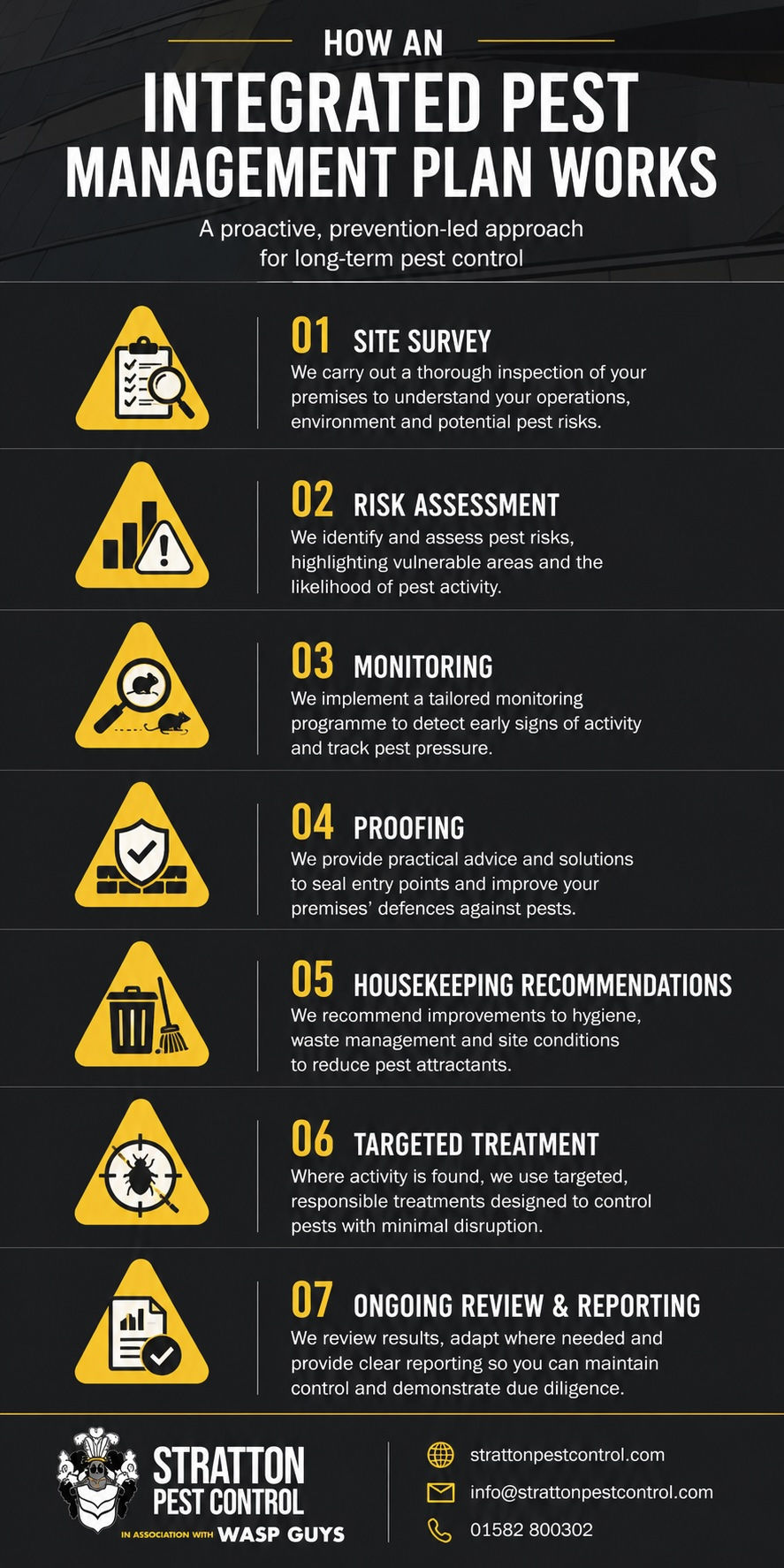
If your business wants to move beyond reactive pest control, an Integrated Pest Management Plan is a smart place to start.
Does Stratton Pest Control provide services in my area? Stratton Pest Control covers


