

Care Homes and Social Care Pest Management
Care homes and social care settings need a pest control approach that is proactive, discreet and dependable. In environments where resident comfort, hygiene and wellbeing are so important, even a minor pest issue can quickly become a serious concern. From nuisance insects to rodents in external areas, pest activity can affect confidence in the setting and place added pressure on staff and managers.
At Stratton Pest Control, we provide pest control for care homes and social care environments using a proactive, prevention-led approach. Our service is designed to help operators reduce pest risks, respond appropriately where activity is found and maintain safe, clean and reassuring surroundings for residents, staff and visitors.
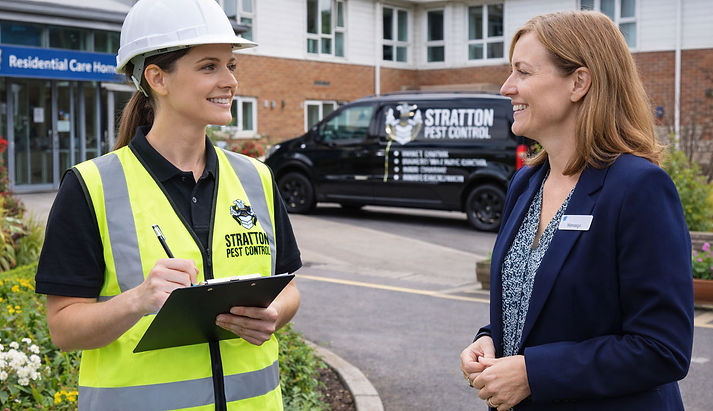

Why care homes and social care settings need proactive pest control
Care settings are very different from many other commercial premises. They are lived-in environments, often with shared dining areas, laundry rooms, waste storage areas, landscaped grounds and regular deliveries. Residents may be elderly, vulnerable or living with complex needs, which means pest issues must be handled with care and sensitivity.
A reactive approach may deal with an immediate problem, but it does not always address the conditions that allowed it to develop. A proactive pest management plan helps identify risks early, reduce attractants and put practical measures in place to lower the chance of recurring problems.
Our pest control service can be tailored for a wide range of care and support environments, including:
-
Residential care homes
-
Nursing homes
-
Dementia care homes
-
Assisted living settings
-
Supported living accommodation
-
Social care facilities
-
Residential support services
-
Specialist care settings
-
Community-based care premises
Common pest issues in care homes and social care environments
Rats and mice around refuse areas, service spaces, kitchens and external perimeters
Flies in dining areas, waste zones, laundry spaces and warmer internal areas
Bed bugs in bedrooms, furnished rooms or other accommodation areas in certain situations
Ants entering through door thresholds, paving joints and cracks in the building fabric
Birds roosting on roofs, ledges, canopies and entrance points
Wasps nesting in roof spaces, eaves, sheds and garden structures
Our proactive pest control approach for healthcare premises
Our care sector pest management plans can include:
-
Routine inspections of internal and external risk areas
-
Monitoring in key pest pressure points
-
Recommendations on housekeeping, waste control and environmental management
-
Proofing advice for access points and structural defects
-
Treatment programmes where required
-
Clear reporting for home managers and operational teams
Helping maintain safe, comfortable care environments
An effective pest control plan helps care providers maintain standards, reduce disruption and protect the comfort of residents. Whether you manage a single residential care home or a wider group of social care settings, we can provide a tailored service that supports your environment and the people who rely on it.
Our 7 Step Pest Control Plan for Care Homes and Social Care
01
Initial site survey and pest risk assessment
We begin with a detailed inspection of the care setting to understand the building layout, how the site operates and where pest risks may be developing. This may include looking at kitchens, dining areas, laundry rooms, waste storage points, bedrooms, service spaces and external grounds.
02
Routine inspections of residential, support and external areas
Regular inspections are carried out across key parts of the premises to identify signs of pest activity, routes of entry and environmental conditions that could encourage pests. This helps us spot issues early and reduce the risk of them becoming more disruptive.
03
Monitoring in key pest pressure points
We place monitoring measures in carefully chosen locations where pests are more likely to be active or gain access. This allows us to detect early warning signs and respond before activity becomes more established.
04
Recommendations
Good housekeeping and effective waste management are important in any care environment. We provide practical recommendations to help reduce food sources, shelter and other conditions that may attract pests to the premises.
05
Proofing advice for access points and structural defects
Preventing pests from entering the building is a key part of a long-term strategy. We identify gaps, damaged vents, poorly sealed service entries and other defects, then recommend suitable proofing measures to improve protection.
06
Treatment programmes where required
Where pest activity is identified, we implement an appropriate treatment programme based on the pest type, the location and the sensitivity of the care environment. Treatments are planned carefully to support the wider preventative approach and minimise disruption.
07
Clear reporting for managers and stakeholders
We provide clear service records, inspection findings and practical recommendations so care home managers and operational stakeholders have visibility over pest risks and the actions being taken. This supports better oversight and a more consistent long-term approach.
Care Homes and Social Care Pest Control FAQs
- 01
- 02
- 03
- 04
- 05
- 06
- 07
- 08
